범주: Miscellaneous
검색 결과: 30
- รหัสและชื่อรายวิชา
ภาษาไทย : 803203 หลักการวิศวกรรมสำหรับงานอาชีวอนามัยและความปลอดภัย
ภาษาอังกฤษ : Principles of Engineering for Occupational Health and Safety
- คำอธิบายรายวิชา (Course Description)
(ภาษาไทย) กลศาสตร์ของไหล การเขียนแบบวิศกรรม ความรู้พื้นฐานทางวิศวกรรมไฟฟ้า โยธา เครื่องกล อุตสาหการ หลักการด้านวิศวกรรมที่เกี่ยวข้องกับงานด้านอาชีวอนามัยและความปลอดภัย เพื่อเป็นแนวทางในการป้องกันและควบคุมอันตรายที่อาจเกิดในสถานที่ทำงานและสิ่งแวดล้อม
(ภาษาอังกฤษ) Fluid Mechanics, engineering drawing, basic knowledge in electrical, civil, mechanical, and industrial engineering, principles of engineering related to occupational health and safety for guidelines of hazard prevention and control in workplace and environment
- จำนวนหน่วยกิต : 3 (3 - 0 - 6)
: บรรยาย 3 ชม. และเรียนรู้-ค้นคว้าด้วยตนเอง 6 ชม. /สัปดาห์
- หลักสูตรและประเภทของรายวิชา
4.1. หลักสูตร : วิทยาศาสตรบัณฑิต สาขาวิชาอาชีวอนามัยและความปลอดภัย
(หลักสูตรปรับปรุง พ.ศ. 2562)
4.2. ประเภทของรายวิชา : กลุ่มวิชาวิศวกรรมทางด้านอาชีวอนามัย และความปลอดภัย
หรือเทคโนโลยีการควบคุมด้านอาชีวอนามัยและความปลอดภัย
อาจารย์ผู้รับผิดชอบรายวิชา และอาจารย์ผู้สอน
5.1. อาจารย์ผู้รับผิดชอบรายวิชา : อาจารย์ ว่าที่ ร.ต.กฤษดา เพ็งอารีย์
สาขาวิชาอาชีวอนามัยและความปลอดภัย
เบอร์โทรศัพท์ 044 22 3916, 084 286 0131
e-mail address : kritsada@g.sut.ac.th
5.2. อาจารย์ผู้สอน : คณาจารย์สำนักวิชาวิศวกรรมศาสตร์
범주: Miscellaneous
- คำอธิบายรายวิชา (Course Description)
(ภาษาไทย) ความรู้พื้นฐานทางวิศวกรรมเครื่องกล ไฟฟ้า โยธา อุตสาหการ และหลักการเขียนแบบหลักการด้านวิศวกรรมที่เกี่ยวข้องกับงานอาชีวอนามัยและความปลอดภัย แนวทางการควบคุมทางวิศวกรรมในการป้องกันและควบคุมอันตรายที่อาจเกิดในสถานที่ทำงานและสิ่งแวดล้อม
(ภาษาอังกฤษ) Basic knowledge in mechanical, electrical, civil, and industrial engineering, engineering drawing, principles of engineering related to occupational health and safety, engineering control guidelines for preventing and controlling hazards in workplace and environment
범주: Miscellaneous
Basic drawing; lettering; orthographic projection; orthographic drawing and pictorial drawings; dimensioning and tolerancing sections; auxiliary views and development; detail and assembly drawings; freehand sketches.
ศึกษาพื้นฐานการเขียนแบบ การเขียนตัวอักษร วิธีการฉายภาพ การเขียนแบบภาพฉาย การกำหนดขนาด ค่าพิกัด ความเผื่อ การเขียนแบบภาพตัดต่าง ๆ การสเก็ตภาพ การเขียนแบบภาพประกอบและภาพแยกชิ้น การเขียนแบบร่างด้วยมือเปล่า
범주: Miscellaneous

กระบวนการออกแบบ และเครื่องมือทางด้านกราฟฟิคสำหรับการสื่อสารเบื้องต้นที่ใช้โดยวิศวกร การบันทึกเอกสารของการออกแบบโดยการวาดด้วยมือ และการวาดเชิงวิศวกรรม หลักการพื้นฐานของเรขาคณิตเชิงพรรณนา การใช้เครื่องมือทางคอมพิวเตอร์ช่วยในการออกแบบ หลักการเบื้องต้นของการออกแบบเพื่อกระบวนการผลิต เน้นการทำงานเป็นกลุ่ม และการวิจารณ์โดยเพื่อร่วมกลุ่มสำหรับการผลิตชิ้นส่วนเพื่อการประกอบ โครงงานการออกแบบแนวความคิดที่นำเสนอผ่านแบบทางวิศวกรรม และการทำปฏิบัติการผ่านเครื่องคอมพิวเตอร์
Introduction to the design process and graphical communications tools used by engineers. Documentation of design through freehand sketching and engineering drawings. Basic descriptive geometry. Computer-aided design as a design tool. Introduction to design for manufacturability. Emphasis of group work and peer review in the production of part for assemblies. Conceptual design projects presented in technical drawing format. Computer Laboratory.
Course Learning Outcomes (CLOs)
CLO1. อ่านและอธิบายแบบวิศวกรรม และแสดงให้เห็นถึงความสามารถในการใช้งานคำศัพท์และสัญลักษณ์ในการสื่อสารเชิงวิศวกรรม
Read and interpret engineering drawings. Demonstrate the use of terminology and symbols used in engineering communications.
CLO2. เขียนแบบทางวิศวกรรม และสร้างเอกสารที่ใช้ในการสื่อสารซึ่งประกอบด้วยการอธิบายอุปกรณ์เชิงกล และระบบผ่านจุด เวกเตอร์ และพื้นผิว
Create engineering drawings. Construct engineering communication documents describing mechanical devices and systems by using points, vectors, and surfaces.
CLO3. เลือกใช้ภาพฉายสองมิติ ภาพตัด ภาพช่วย และภาพสามมิติเพื่อสื่อสารแนวคิดของแบบทางวิศวกรรมให้กับผู้ผลิดได้อย่างเหมาะสม
Select appropriate orthographic, sectional, auxiliary, and pictorial views, to convey engineering design concepts to fabricators.
CLO4. กำหนดมิติ และความคลาดเคลื่อนทางเลขาคณิตเพื่อสื่อสารข้อกำหนดการออกแบบการทำงานของชิ้นส่วนได้อย่างเหมาะสม
Construct appropriate dimensions and geometric tolerances to convey a part’s functional design requirements to fabricators
CLO5. คำนวณความคลาดเคลื่อนของขนาดที่จำเป็นเพื่อรับรองความสัมพันธ์ของการทำงานกับการประกอบชิ้นส่วนหลายชิ้นส่วนเข้าด้วยกัน
Calculate size tolerances necessary to ensure the functional relationship to multi-part assemblies.
CLO6. สร้างและกำหนดแนวคิดวิธีแก้ไขปัญหาทางวิศวกรรม
Create and define a conceptual solution to an engineering problem.
CLO7. ใช้โปรแกรมสำเร็จรูปช่วยการออกแบบเพื่อสร้างเอกสารแบบทางวิศวกรรม
Use a common industrial CAD package to create engineering documentation.
Prerequisite: ENG31 1001 Engineering Materials
This course is a study for the main manufacturing processes. It will illustrate how a design is turned into a product. It will offer a detailed understanding of manufacturing processes used in industry and will relate the design requirements of a part to the possible manufacturing processes. The course will also discuss how the material properties of a product control the spectrum of manufacturing processes that can be utilized and will highlight major design guidelines for each manufacturing process to be successful. A laboratory project is included to mimic the design principles.
Learning outcomes
1. Correlate the material type with the possible fabrication processes.
2. Describe the operations and tools for major manufacturing processes.
3. Highlight the process design parameters to eliminate defective products.
4. Examine the design drawing of a component, gather related information, and describe a feasible sequence of manufacturing processes for production of the component
Introduction to the design process and graphical communications tools used by engineers. Documentation of design through freehand sketching and engineering drawings. Basic descriptive geometry. Computer-aided design as a design tool. Introduction to design for manufacturability. Emphasis of group work and peer review in the production of part for assemblies. Conceptual design projects presented in technical drawing format. Computer Laboratory.
กระบวนการออกแบบ และเครื่องมือทางด้านกราฟฟิคสำหรับการสื่อสารเบื้องต้นที่ใช้โดยวิศวกร การบันทึกเอกสารของการออกแบบโดยการวาดด้วยมือ และการวาดเชิงวิศวกรรม หลักการพื้นฐานของเรขาคณิตเชิงพรรณนา การใช้เครื่องมือทางคอมพิวเตอร์ช่วยในการออกแบบ หลักการเบื้องต้นของการออกแบบเพื่อกระบวนการผลิต เน้นการทำงานเป็นกลุ่ม และการวิจารณ์โดยเพื่อร่วมกลุ่มสำหรับการผลิตชิ้นส่วนเพื่อการประกอบ โครงงานการออกแบบแนวความคิดที่นำเสนอผ่านแบบทางวิศวกรรม และการทำปฏิบัติการผ่านเครื่องคอมพิวเตอร์
Course Learning Outcomes (CLOs)
CLO1. Read and interpret engineering drawings. Demonstrate the use of terminology and symbols used in engineering communications.
อ่านและอธิบายแบบวิศวกรรม และแสดงให้เห็นถึงความสามารถในการใช้งานคำศัพท์ และสัญลักษณ์ในการสื่อสารเชิงวิศวกรรม
CLO2. Create engineering drawings. Construct engineering communication documents describing mechanical devices and systems by using points, vectors, and surfaces.
เขียนแบบทางวิศวกรรม และสร้างเอกสารที่ใช้ในการสื่อสารซึ่งประกอบด้วยการอธิบายอุปกรณ์เชิงกล และระบบผ่านจุด เวกเตอร์ และพื้นผิว
CLO3. Select appropriate orthographic, sectional, auxiliary, and pictorial views, to convey engineering design concepts to fabricators.
เลือกใช้ภาพฉายสองมิติ ภาพตัด ภาพช่วย และภาพสามมิติเพื่อสื่อสารแนวคิดของแบบทางวิศวกรรมให้กับผู้ผลิดได้อย่างเหมาะสม
CLO4. Construct appropriate dimensions and geometric tolerances to convey a part’s functional design requirements to fabricators.
กำหนดมิติ และความคลาดเคลื่อนทางเลขาคณิตเพื่อสื่อสารข้อกำหนดการออกแบบการทำงานของชิ้นส่วนได้อย่างเหมาะสม
CLO5. Calculate size tolerances necessary to ensure the functional relationship to multi-part assemblies.
คำนวณความคลาดเคลื่อนของขนาดที่จำเป็นเพื่อรับรองความสัมพันธ์ของการทำงานกับการประกอบชิ้นส่วนหลายชิ้นส่วนเข้าด้วยกัน
CLO6. Create and define a conceptual solution to an engineering problem.
สร้างและกำหนดแนวคิดวิธีแก้ไขปัญหาทางวิศวกรรม
CLO7. Use a common industrial CAD package to create engineering documentation.
ใช้โปรแกรมสำเร็จรูปช่วยการออกแบบเพื่อสร้างเอกสารแบบทางวิศวกรรม
This course is a project-based study for selecting machine elements and designing equipment and tooling. Learners will work on joint projects from initial specification to scheme suggestion. Specific requirements will differ depending on the nature of the project. Learners need to use their creative thinking skill to generate and critical thinking skill to judge the ideas. Projects include the challenges that require application of math, science, and engineering knowledge; analytical and design procedures; communication skills; combined with ethical behavior of the individuals in each team.
รายวิชานี้เป็นรายวิชาโครงงานสำหรับการเลือกองค์ประกอบของเครื่องจักรและการออกแบบอุปกรณ์และเครื่องมือ ผู้เรียนจะทำโครงงานบูรณาการจากข้อกำหนดและความต้องการเพื่อเสนอแนวทาง โดยความต้องการเฉพาะจะแตกต่างไปตามแต่ละโครงงาน ผู้เรียนจะต้องใช้ความสามารถในการคิดอย่างสร้างสรรค์เพื่อเสนอแนวความคิด และใช้ทักษะการคิดเชิงวิพากษ์เพื่อตัดสินแนวความคิด โครงงานจะประกอบไปด้วยความท้าทายที่ต้องประยุกต์ใช้ทักษะด้านคณิตศาสตร์ วิทยาศาสตร์ และอาจรวมถึงความรู้ด้านวิศวกรรมอื่น ๆ ประกอบกับการวิเคราะห์และออกแบบขั้นตอน ทักษะด้านการสื่อสาร รวมถึงการทำงานอย่างมีจรรยาบรรณวิชาชีพในกลุ่มของตนเอง
Course Learning Outcomes (CLOs)
CLO1. รวบรวมข้อมูลที่สำคัญและความต้องการชิ้นส่วนเครื่องจักรกลจากขนาดมิติและรูปร่างของชิ้นส่วน, และมาตรฐานต่าง ๆ ที่เกี่ยวข้องได้
(Collect important information and needs of machine components from part drawing and dimension, and relevant standards, etc.)
CLO2. วิเคราะห์ความต้องการของผู้ใช้เครื่องจักร ความสามารถในการผลิตของชิ้นส่วนเครื่องจักรกล กลศาสตร์วัสดุ และกลไกต่างๆ
(Analyse machine-user requirements, manufacturability of mechanical components, mechanics of materials, and mechanisms.)
CLO3. ออกแบบเครื่องมือและเครื่องจักรตามความจำเป็น ข้อจำกัด รวมถึงความต้องการอื่น
(Purpose design of tooling and equipment by considering the constraints, needs, and other requirements.)
CLO4. ตรวจสอบทางเลือกโดยการทดสอบทางกล ทดลอง หรือจำลองการทำงาน
(Verify the solution by performing mechanical, functional, or simulation tests.)
CLO5. ใช้โปรแกรมออกแบบและวิเคราะห์ทางวิศวกรรม เช่น CAD, CAM and CAE เพื่อช่วยออกแบบเครื่องมือและอุปกรณ์
(Use CAD, CAM, CAE to support the design of tooling and equipment.
CLO6. พิจารณาผลกระทบของการแก้ปัญหาทางวิศวกรรมในบริบทของโลก เศรษฐกิจ สิ่งแวดล้อม และสังคม (Consider the impact of engineering solutions in global, economic, environmental, and societal contexts.)
CLO7. มีความรับผิดชอบต่องานทางด้านวิศวกรรมที่ได้รับมอบหมาย
(Responsible for tasks relating with engineering profession.)
CLO8. ใช้ข้อมูลสนับสนุนที่ช่วยให้การสื่อสารมีคุณภาพสูงขึ้น
(Use supporting information that enables quality of communication.)
CLO9. ใช้ภาษาเหมาะสมกับผู้รับสาร (Use language appropriate to the audience.)
CLO10. ใช้ความรู้ที่มีอยู่เดิมกับสถานการณ์ใหม่ได้ (Apply existing knowledge to new situations.)
CLO11. มีส่วนร่วมกับการสร้างบรรยากาศการมีส่วนร่วมในการทำงาน
(Participate in creating a participatory atmosphere at work.)
Introduction to the design process and graphical communications tools used by engineers. Documentation of design through freehand sketching and engineering drawings. Basic descriptive geometry. Computer-aided design as a design tool. Introduction to design for manufacturability. Emphasis of group work and peer review in the production of part for assemblies. Conceptual design projects presented in technical drawing format. Computer Laboratory.
กระบวนการออกแบบ และเครื่องมือทางด้านกราฟฟิคสำหรับการสื่อสารเบื้องต้นที่ใช้โดยวิศวกร การบันทึกเอกสารของการออกแบบโดยการวาดด้วยมือ และการวาดเชิงวิศวกรรม หลักการพื้นฐานของเรขาคณิตเชิงพรรณนา การใช้เครื่องมือทางคอมพิวเตอร์ช่วยในการออกแบบ หลักการเบื้องต้นของการออกแบบเพื่อกระบวนการผลิต เน้นการทำงานเป็นกลุ่ม และการวิจารณ์โดยเพื่อร่วมกลุ่มสำหรับการผลิตชิ้นส่วนเพื่อการประกอบ โครงงานการออกแบบแนวความคิดที่นำเสนอผ่านแบบทางวิศวกรรม และการทำปฏิบัติการผ่านเครื่องคอมพิวเตอร์
Description:
รายวิชานี้จะเรียนเกี่ยวกับพื้นฐานการใช้โปรแกรม AutoCAD เน้นการออกแบบและเขียน แบบชิ้นงานกลเป็นหลัก โดยจะเริ่มศึกษาเครื่องมือและฟังก์ชันพื้นฐานที่จำเป็น คำสั่งของโปรแกรม การเขียน รูปพื้นฐานในสองและสามมิติ การเขียนแบบโดยการวางหลายชั้น การสร้างเอกสารแบบสั่งงานสำหรับวิศวกร
Philosophy of computer-based design using AutoCAD emphasise on design and create mechanical parts. Study the function and essential commands of AutoCAD, basics of drawing in 2D and 3D, the practice of multiple layers for mechanical drawing.

รายละเอียดรายวิชา
ศึกษาหลักการเขียนและอ่านแบบทางกลตามระบบการเขียนแบบมาตรฐานที่ใช้ในอุตสาหกรรม การกำหนดมิติ และการเผื่อ การกำหนดลักษณะผิวในงานเขียนแบบเทคนิคเพื่อการผลิต การหมุน รอยตัดภาพคลี่ ภาพตัด และสัญนิยม การเขียนภาพเครื่องจักกลแบบต่างๆ ที่มีมักพบในงานอุตสาหกรรม หลักการเขียนภาพประกอบของชิ้นส่วนเครื่องจักรตามมาตรฐาน
วิชาบังคับก่อน : ENG25 1010 เขียนแบบวิศวกรรม 1 (Engineering graphics I)

ENG32 3307 สารสนเทศภูมิศาสตร์ และการทำแบบก่อสร้างสำหรับวิศวกรรมสิ่งแวดล้อม
GIS and Construction Drawings Preparation for Environmental Engineering
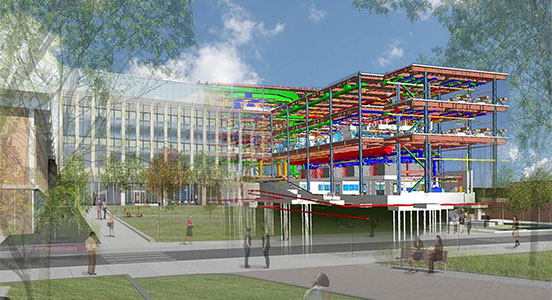
ความสัมพันธ์ของแบบจำลองสารสนเทศภูมิศาสตร์ และตำแหน่งที่มีอยู่จริงบนพื้นโลก และการนำเสนอแผนที่ แบบจำลองเชิงพื้นที่ การแปลปัญหาเข้าสู่ระบบสารสนเทศภูมิศาสตร์ การนำเข้าข้อมูล การจัดการฐานข้อมูล และ การใช้ระบบสนเทศภูมิศาสตร์ในการแก้ปัญหางานด้านสิ่งแวดล้อมกรณีศึกษา กฎหมายเกี่ยวกับงานก่อสร้าง ขั้นตอนการก่อสร้าง สัญลักษณ์แบบในงานก่อสร้าง การอ่านแบบในงานก่อสร้าง โปรแกรมที่ใช้ในงานทำแบบก่อสร้าง การสำรวจในการก่อสร้าง การฝึกปฏิบัติเขียนแบบระบบงานสุขาภิบาล การฝึกปฏิบัติเขียนแบบระบบควบคุมมลพิษ

1. Description:
รายวิชานี้จะเรียนเกี่ยวกับพื้นฐานการใช้โปรแกรม AutoCAD เน้นการออกแบบและเขียน แบบชิ้นงานกลเป็นหลัก โดยจะเริ่มศึกษาเครื่องมือและฟังก์ชันพื้นฐานที่จำเป็น คำสั่งของโปรแกรม การเขียน รูปพื้นฐานในสองและสามมิติ การเขียนแบบโดยการวางหลายชั้น การสร้างเอกสารแบบสั่งงานสำหรับวิศวกร
Philosophy of computer-based design using AutoCAD emphasise on design and create mechanical parts. Study the function and essential commands of AutoCAD, basics of drawing in 2D and 3D, the practice of multiple layers for mechanical drawing.
2. Credits: 2(1-3-5)
3. Prerequisites or co-requisites:
None
4. Course Type: Technical Elective
5. Course Instructor: Asst. Prof. Dr. Prasert Aengchuan,
E-mail prasert.a@g.sut.ac.th, Tel. 4272
6. Classroom/Teaching Platform: Facebook Group, SUT e-Learning
Facebook Group: ENG35 4507 AUTOCAD FOR ENGINEERING
Google Classroom: ENG35 4507 AUTOCAD FOR ENGINEERING
7. Teaching-Learning Materials:
8. Course Learning Outcomes (CLOs)
CLO1 สามารถใช้โปรแกรมออโตแคดเขียนแบบรูปพื้นฐานในสองและสามมิติได้
Ability to apply AutaCAD package to create drawings in 2D and 3D.
CLO2 สามารถเขียนแบบโดยการวางหลายชั้นในออโตแคดได้
Ability to create multiple layers in AutoCAD.
CLO3 สามารถสร้างแบบทางวิศวกรรมให้เป็นไปตามมาตรฐานของแบบวิศวกรรมทาง อุตสาหกรรม
Ability to create mechanical drawings according to industry standards.