ประเภท: Miscellaneous
Course Content
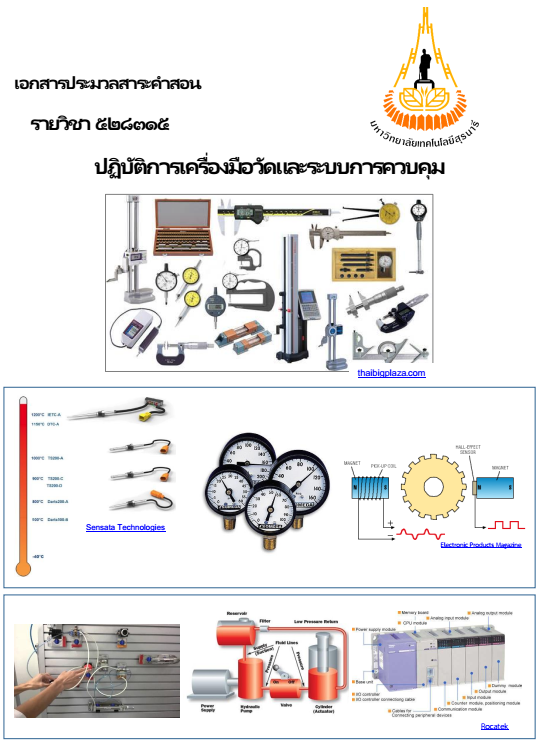
Practice on measurement instruments and control systems related to polymer processing machine including temperature and pressure measurement, coordinate measuring machine (CMM), proximity sensor, pneumatic system, hydraulic system and program logic control (PLC) system, proximity sensor, pneumatic system, hydraulic system and program logic control (PLC) system.
Course Learning Outcomes vs Program Learning Outcomes (Program Learning Outcomes) vs PI
PLO3: สามารถพัฒนาและดำเนินการตรวจสอบและทดสอบ ทดลองที่เหมาะสม วิเคราะห์และแปลผลข้อมูล โดยใช้วิจารณญาณทางวิศวกรรมพอลิเมอร์ เพื่อสรุปผลการทดลอง
CLO1: Able to apply basic science and engineering to describe basic principles of measuring instruments and control systems, related to polymer processing machines. (สามารถใช้พื้นฐานทางด้านวิทยาศาสตร์และวิศวกรรมศาสตร์อธิบายหลักการทำงานเบื้องต้นของเครื่องมือวัดและระบบการควบคุมเครื่องจักรในกระบวนการขึ้นรูปพอลิเมอร์) (report introduction or quiz) (PI3.2)
CLO2: Able to use measuring instruments appropriately and safely. (สามารถใช้อุปกรณ์วัด (sensor) ได้อย่างเหมาะและปลอดภัย) (PI3.1)
CLO3: Able to make the unit of proximity, pneumatic, and hydraulic system function properly and
safely (สามารถเชื่อมต่อหน่วยย่อยของตัววัด proximity ระบบนิวเมติกส์ และระบบไฮดรอลิกส์ได้อย่างถูกต้องและปลอดภัย) (PI3.1)
CLO4: Able to write command program to control the PLC system and make it function as desired and safely (สามารถเขียนชุดคำสั่งควบคุมการทำงานของระบบ PLC เพื่อให้หน่วยย่อยของระบบทำงานได้อย่างที่ต้องการและปลอดภัย) (PI3.1)
CLO5: Able to determine data that is appropriate to collect. (รู้ข้อมูลที่เหมาะสมในการบันทึก) (PI3.2)
CLO6: Able to calculate readout error of the instruments. (คำนวณค่าความผิดพลาดของข้อมูลจากการวัดได้) (PI3.3) (tolerance and acceptance limit)
PLO4: สามารถติดต่อสื่อสารในงานวิศวกรรมได้อย่างมีประสิทธิผลกับผู้รับที่หลากหลาย (ทั้งภาษาไทยและภาษาต่างประเทศ ด้วยวาจา การเขียนรายงาน การเสนอผลงาน แบบทางวิศวกรรม
CLO7: Grammarly write an academic short report in an appropriate technical style format covering all required topics. (สามารถเขียนรายงานทางวิชาการอย่างสั้นในรูปแบบทางเทคนิคและไวยกรณ์ที่เหมาะสม และหัวข้อรายงานครบถ้วนตามที่กำหนด) (ภาพรวมรายงาน) (PI4.1)
CLO8: Graphically present the results as graphs or tables, suitably. (นำเสนอผลจากการทดสอบในรูปแบบของกราฟ หรือ ตาราง ได้อย่างเหมาะสม) (PI4.2)
1. Description:
รายวิชานี้จะเรียนเกี่ยวกับพื้นฐานการใช้โปรแกรม AutoCAD เน้นการออกแบบและเขียน แบบชิ้นงานกลเป็นหลัก โดยจะเริ่มศึกษาเครื่องมือและฟังก์ชันพื้นฐานที่จำเป็น คำสั่งของโปรแกรม การเขียน รูปพื้นฐานในสองและสามมิติ การเขียนแบบโดยการวางหลายชั้น การสร้างเอกสารแบบสั่งงานสำหรับวิศวกร
Philosophy of computer-based design using AutoCAD emphasise on design and create mechanical parts. Study the function and essential commands of AutoCAD, basics of drawing in 2D and 3D, the practice of multiple layers for mechanical drawing.
2. Credits: 2(1-3-5)
3. Prerequisites or co-requisites:
None
4. Course Type: Technical Elective
5. Course Instructor: Asst. Prof. Dr. Prasert Aengchuan,
E-mail prasert.a@g.sut.ac.th, Tel. 4272
6. Classroom/Teaching Platform: Facebook Group, SUT e-Learning
Facebook Group: ENG35 4507 AUTOCAD FOR ENGINEERING
Google Classroom: ENG35 4507 AUTOCAD FOR ENGINEERING
7. Teaching-Learning Materials:
8. Course Learning Outcomes (CLOs)
CLO1 สามารถใช้โปรแกรมออโตแคดเขียนแบบรูปพื้นฐานในสองและสามมิติได้
Ability to apply AutaCAD package to create drawings in 2D and 3D.
CLO2 สามารถเขียนแบบโดยการวางหลายชั้นในออโตแคดได้
Ability to create multiple layers in AutoCAD.
CLO3 สามารถสร้างแบบทางวิศวกรรมให้เป็นไปตามมาตรฐานของแบบวิศวกรรมทาง อุตสาหกรรม
Ability to create mechanical drawings according to industry standards.
E-learning สำหรับนักศึกษาสาขาวิชาวิศวกรรมเมคคาทรอนิกส์ สำนักวิชาวิศวกรรมศาสตร์ ที่ลงทะเบียนเรียนในรายวิชา ENG51 0201 และ ENG51 0202


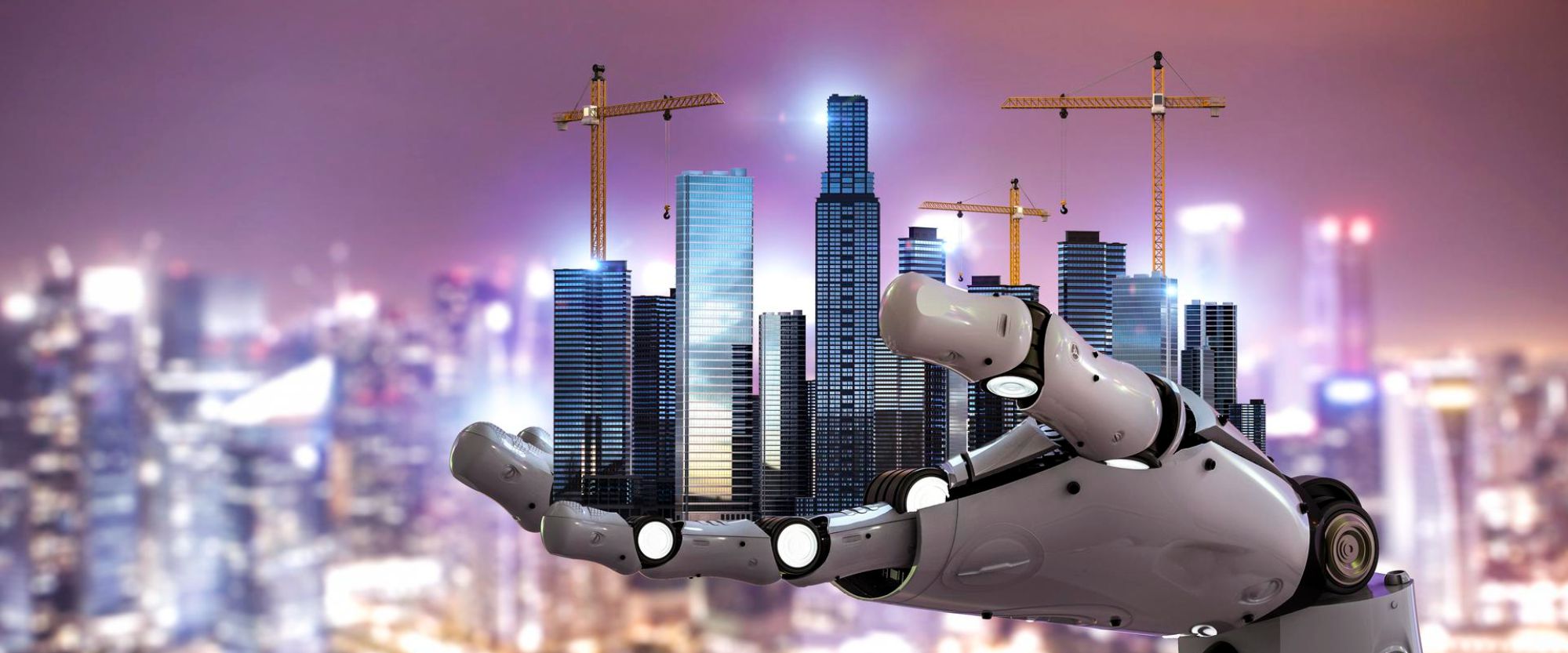
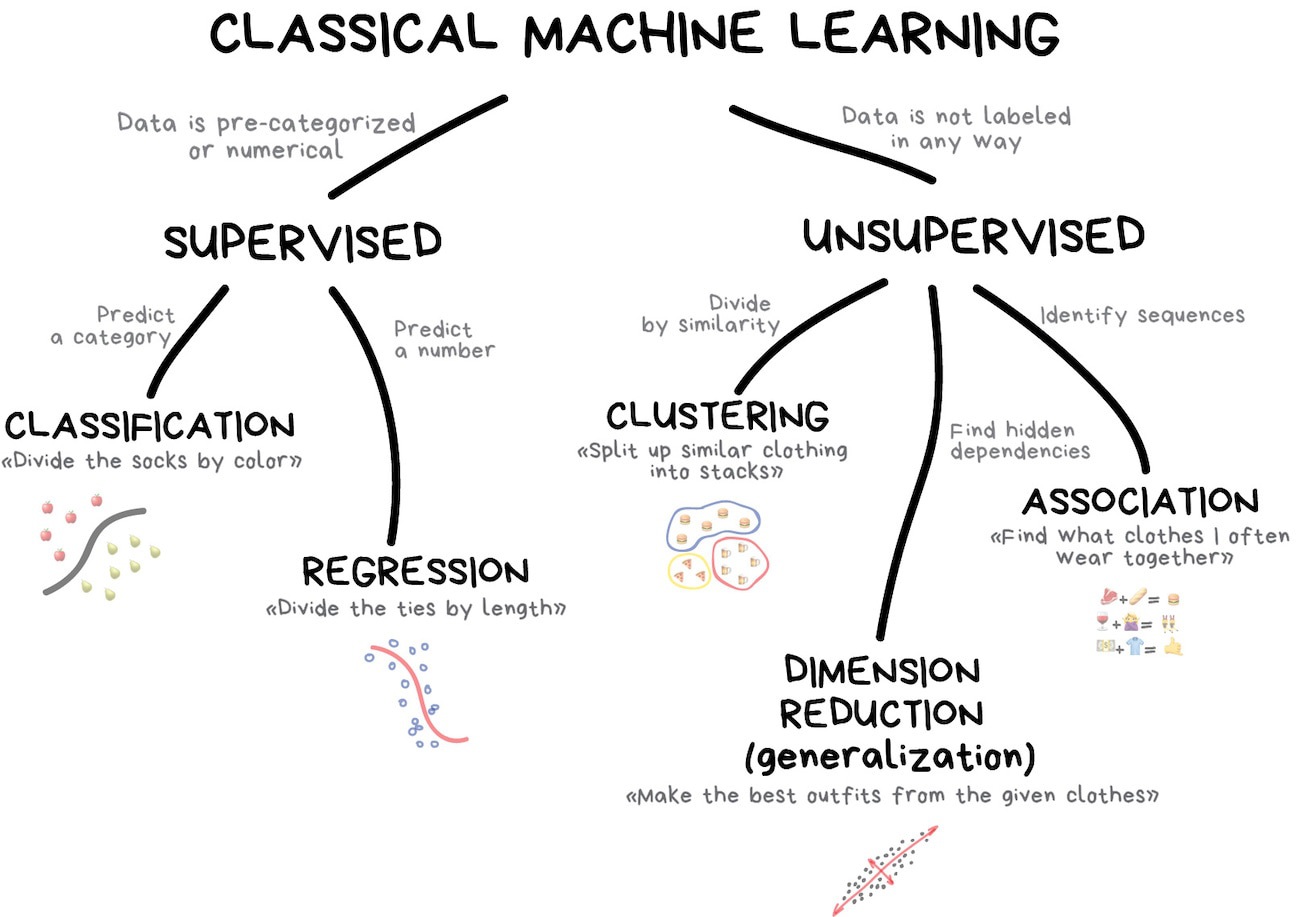
รายวิชานี้มุ่งเน้นการประยุกต์ใช้เทคโนโลยีปัญญาประดิษฐ์ (AI) ในการวิเคราะห์และพัฒนางานวิศวกรรมโยธา เพื่อเสริมสร้างความสามารถในการออกแบบและแก้ไขปัญหาที่ซับซ้อนของวิศวกร ผู้เรียนจะได้ศึกษาแนวคิดพื้นฐานของปัญญาประดิษฐ์ เช่น การเรียนรู้ของเครื่อง (Machine Learning) ซึ่งประกอบด้วย Supervise Learning, Unsupervised Learning, Reinforcement Learning, และขั้นตอนการดำเนินการการเรียนรู้ของเครื่อง การวิเคราะห์ข้อมูลขนาดใหญ่ (Big Data) และการประมวลผลภาพ (Image Processing) โดยมุ่งเน้นไปทีการศึกษาแบบ Surpervise Learning อาทิ Linear Regression, Logistic Regression, Artificial Neural Network และ Convolutional Neural Network เป็นต้น เพื่อมุ่งนี้ให้สามารถต่อยอดนำไปใช้ในงานด้านวิศวกรรมโยธาและการบริหารงานก่อสร้าง นอกจากนี้ ผู้เรียนจะได้รับการฝึกปฏิบัติในการใช้ซอฟต์แวร์และแพลตฟอร์ม AI ที่เกี่ยวข้อง เพื่อพัฒนาความเข้าใจและสามารถนำไปประยุกต์ใช้ในงานวิศวกรรมโยธาได้อย่างมีประสิทธิภาพ

Chain structure of polymer molecules, configurations and conformation of polymer chain, molecular weight and molecular size, amorphous state and crystalline state of solid polymers, models of chain conformation in amorphous state and crystalline state, crystalline morphology, thermal transitions, crystallization and kinetics of crystallization, thermal transitions, thermodynamics of fusion, solution process, thermodynamics of mixing and phase separation, viscoelasticity, time-temperature superposition, mechanical behavior, failure behavior, thermal properties, electrical properties, and optical properties
Course Responsibility to Program Learning Outcome
PLO1: An ability to apply knowledge of mathematics, science, engineering fundamentals for petrochemical and polymer engineering procedures or processes.
PLO2: An ability to analyze petrochemical and polymer engineering problems: Identify, formulate and research literature reaching the solution for complex engineering problems.
PLO8: An ability to understand and consider the impact of professional petrochemical and polymer engineering work to economics society environmental and sustainability
PLO11: Recognize the need for, and have ability to engage in life-long learning
|
CLO1:Be able to: classify and explain basic chain structure conformation, configuration and stereochemistry of polymer chains |
|
CLO2: Be able to interrelate structure to the properties of polymer |
|
CLO3: Be able to explain influence of factors/parameters on properties of polymers |
|
CLO4: Be able to use equation for predicting thermal transitions and solvation phenomena |
|
CLO5: Be able to demonstrate information on environmental and societal impact from source/resource consumption for polymeric material production to end use product |
|
CLO6: Be able to search relevant information from open source. |

Prerequisite : 105101 Physics I
Basic concepts. Thermodynamic properties, temperature, work and heat. First law. Second law, irreversibilities and entropy. Availability. Tables and charts of properties. Analyses of thermodynamic processes and cycles. Vapor and gas power cycles.
Learning outcomes
This course provides basic concepts of Thermodynamics. Student will be able to describe the basic concepts of Thermodynamics. Student will be able to determine properties of pure substances at different states from property tables. Student will be able to apply the first law of thermodynamics to analyze energy conversion in closed and open systems. Student will be able to apply the second law of thermodynamics and the Carnot cycle to evaluate the thermal efficiency and coefficients of performance for heat engines, refrigerators, and heat pumps. Student will be able to calculate the entropy changes that takes place during processes.

ENG85 2110 Mechanics of Materials I 3(3-0-6)
Prerequisite: ENG85 2030
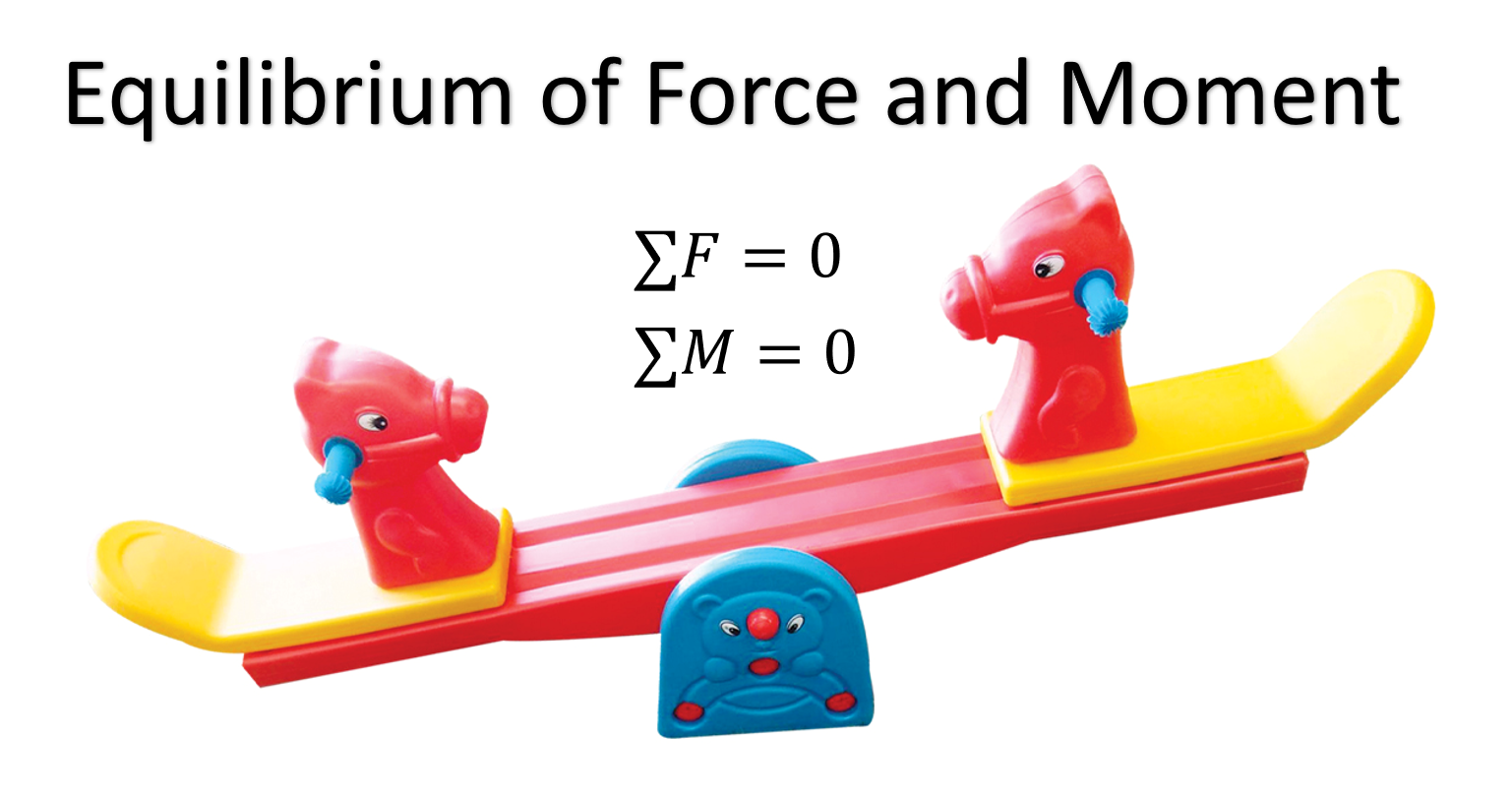
Engineering Statics Forces and stresses; stress-strain relations; stresses in beams; shear diagram and moment diagram; deflection of beams; buckling of columns; Mohr’s circle and combined stresses; failure criteria.
Course Learning Outcomes (CLOs)


ENG85 3031 Aircraft Structures 3(2-3-7)
Prerequisite: ENG85 2110 Mechanics of Materials I
The principles of deformation; stress and strain in materials; properties of materials; stress and strain relations; analysis of simple mechanical elements subjected bending shear and torsion; theories of failure; analysis of plate connection; principles of stressed skin analysis; analysis of the opened and closed thin-walled tubes; stress analysis of aircraft components including wing spars, box beams, fuselage and others.
Course Learning Outcomes (CLOs)
1. Understand the preliminary structure analysis and failure criteria;
2. Describe the failure parameters of structural analysis;
3. Understand limitations and range of applicability of mechanical and aircraft structural analysis;
4. Describe the plate theory; calculate deflections in thin plates and stress distribution;
5. Analyze for an outline suitable thin wall tube, wing, fuselage and features of mechanical parts or aircraft structural parts that will satisfy requirements or that appropriate to an action.

Objectives:
1. To develop student’s ability for effective and natural communication in both social and academic settings
2. To promote integrated skills with primary emphasis on listening and speaking skills
3. To improve communication management and language learning strategies to become effective communicators
4. To promote active learning in students through topics relevant to their interests and experiences
5. To introduce autonomous learning using various up-to-date and useful resource
 evolve-level-1b-student-s-book-cambridge.jpg
This course aims at all essential language skills; listening, speaking, reading, and writing. The learners will expose the language through various learning materials and activities in order to acknowledge and understand the diversity of cultures, customs, traditions, thinking, and society of the world community. In addition, they will learn how to accurately read aloud texts, news, announcements, advertisements, poems and skits by observing the principles of reading. Moreover, class activities will encourage the learners to be able to converse and write to exchange data about themselves, various matters around them, experiences, situations, news or incidents, issues of interest and communicate them continuously and appropriately. The learns will learn how to choose and use requests, clarifications, explanations and give instructions; speak and write to show needs; offer and provide assistance; speak and write appropriately to ask for and give data, describe, explain, and compare. At the end of the course, the students are expected to be able to express their opinions about matters/issues/news/incidents, which they have heard and read by using register of language, tone of voice, gesture and manners appropriate to the level of the persons, time, occasions and places. Finally, the learners will learn how to conduct research/search, analyze, and conclude the data related to the learning areas from various sources.
This course aims at all essential language skills; listening, speaking, reading, and writing. The learners will expose the language through various learning materials and activities in order to acknowledge and understand the diversity of cultures, customs, traditions, thinking, and society of the world community. In addition, they will learn how to accurately read aloud texts, news, announcements, advertisements, poems and skits by observing the principles of reading. Moreover, class activities will encourage the learners to be able to converse and write to exchange data about themselves, various matters around them, experiences, situations, news or incidents, issues of interest and communicate them continuously and appropriately. The learns will learn how to choose and use requests, clarifications, explanations and give instructions; speak and write to show needs; offer and provide assistance; speak and write appropriately to ask for and give data, describe, explain, and compare. At the end of the course, the students are expected to be able to express their opinions about matters/issues/news/incidents, which they have heard and read by using register of language, tone of voice, gesture and manners appropriate to the level of the persons, time, occasions and places. Finally, the learners will learn how to conduct research/search, analyze, and conclude the data related to the learning areas from various sources.
ตารางเรียน วันศุกร์เวลา 13.00 -16.00 น. ห้อง B2104
FaceBook 67 การเขียน IAT31 1002 https://www.facebook.com/groups/3820453811548052
วัตถุประสงค์ เพื่อให้นักศึกษาทราบถึงหลักการ โครงสร้าง และรูปแบบการเขียนภาษาไทยเชิงวิชาการ และสามารถสื่อสารโดยการเขียน การใช้ภาษาไทยในการเขียนเชิงวิชาการได้อย่างมีประสิทธิภาพ อีกทั้งพัฒนาทักษะการทำงานเป็นทีม การสื่อสาร การรู้จักตนเอง และเรียนรู้ด้วยตนเอง
ผลลัพธ์การเรียนรู้ Course Learning Outcome

วัตถุประสงค์ เพื่อให้นักศึกษาทราบถึงหลักการ โครงสร้าง และรูปแบบการเขียนภาษาไทยเชิงวิชาการ และสามารถสื่อสารโดยการเขียน การใช้ภาษาไทยในการเขียนเชิงวิชาการได้อย่างมีประสิทธิภาพ อีกทั้งพัฒนาทักษะการทำงานเป็นทีม การสื่อสาร การรู้จักตนเอง และเรียนรู้ด้วยตนเอง
ผลลัพธ์การเรียนรู้ Course Learning Outcome
1. นักศึกษาสามารถวิเคราะห์ และ ใช้ภาษาไทยในการเขียนตอบคำถามได้ตรงประเด็น
2. นักศึกษาสามารถใช้ภาษาไทยในการเขียนเชิงวิชาการทางวิทยาศาสตร์ได้อย่างมีประสิทธิภาพ
3. นักศึกษามีการพัฒนาทักษะในศตวรรษที่ 21 โดยเฉพาะทักษะการทำงานเป็นทีมและทักษะการสื่อสาร
4. นักศึกษามีความรับผิดชอบต่อตนเองและผู้อื่น ตรงต่อเวลา และ มีระเบียบวินัย

Backward journeys of food in the market. The course covers how food arrives at end users from the beginning, starting at farms and going backward in the sequence, exploring how science and technology are involved. This includes, for example, how food is stored on shelves, the management of food on shelves, delivery of food products from factories, food production on an industrial scale, preparation and preservation of raw materials for food production, delivery of raw materials from farms to factories, animal and crop production, harvesting processes, and obtaining animal and crop breeds. The emphasis is also on how food can be obtained from multiple production approaches such as safe agriculture and organic agriculture. The course highlights the fact that science and technology are involved in all processes and management. Furthermore, it emphasizes leading students to identify opportunities and risks in food supply chains and food businesses. It covers the evolution of technology and innovation involved, the effects of global changes on food businesses, and relevant regulations. This course serves as a brief introduction to the 4-year program.
Course Learning Outcomes (CLOs):
Upon successful completion of this course, students must be able to:
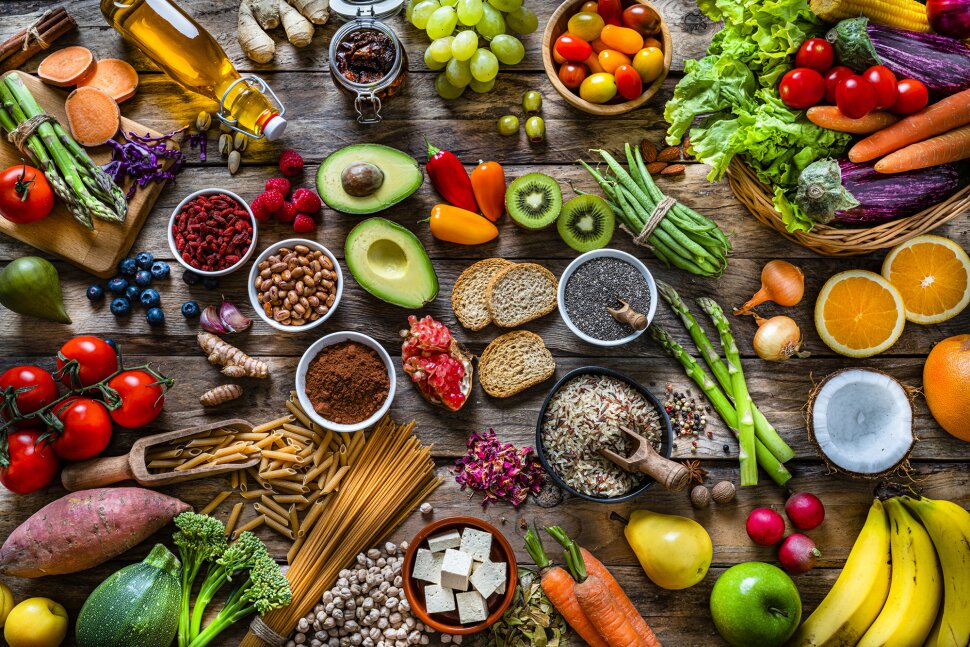
The arts and sciences of foods, cooking, and food culture; biological and spiritual requirements of foods; foods as art forms, emotional experiences, traditions, and multicultural aspects; the evolution of food culture; and dining manners.
Course Learning Outcomes (CLOs):
Upon successful completion of this course, students must be able to:
1. Understand the food landscape from the perspective of energy and chemical sources of the body, as well as its form as an art and its significance in various cultures.
2. Understand the risks and opportunities associated with food innovation in both national and global contexts.
3. Apply creative thinking to generate innovative ideas related to food.
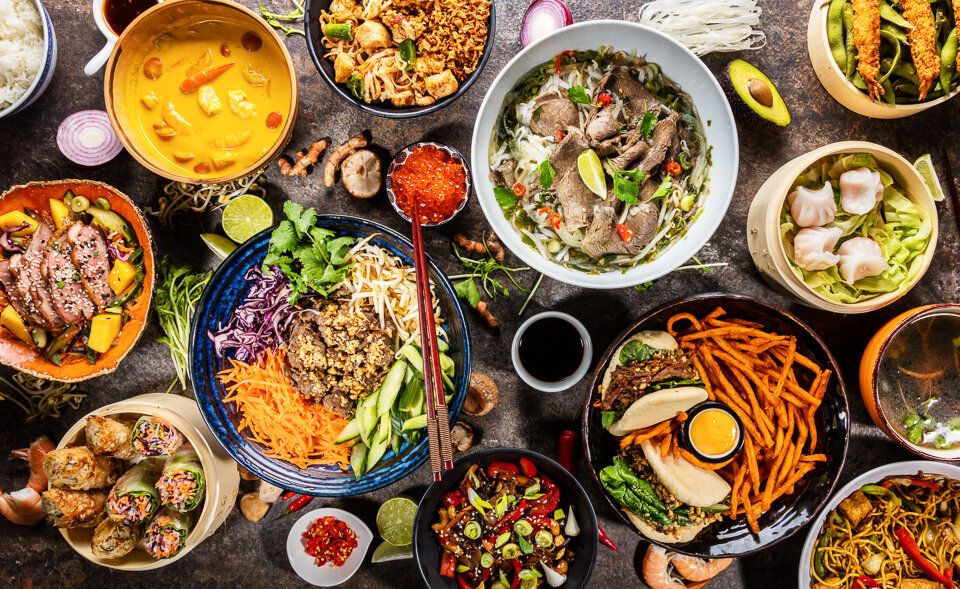
This course will focus on three areas as follow: 1) Food preservation using low heat (mild process) such as chilling or freezing, the reduction of water activity, drying, concentration and hurdle technology. 2)Food preservation using heat treatment such as pasteurization, cooking and blanching. 3) Food prevention using packaging.
Course Learning outcomes (CLOs)
Having successfully completed this course, student must be able to :
1. The students will be able to know and understand about technology in food preservation.
2. The students will be able to selected appropriate technology for food preservation.
IAT31 1206 Art of storytelling 3(2-3-4)
Prerequisite: None
This course will develop students to understand communication skills in various ways, focusing on learning the principles and procedures of communication. In order for students to be able to effectively convey the content or message they need in a complete process both online and on ground. Not only develop students to be media creators but also provides an understanding of the dimensions of design, creativity, and distribution by the application of information technology and computer.
Course Learning outcomes (CLOs)
Having successfully completed this course, student must be able to:
1. Understand the principles and procedures of communication.
2. Able to lecture, analyze, critique case.
3. Able to use information technology and computer for searching information and presentation.

This course presents communication skills and principles with a strong focus on message awareness. Learners will understand the views of the audience through various conditions and factors such as the process of understanding the media, understanding the meta model, as well as the assessment of the awareness situation to create the media and presentation to achieve their objectives in different situations by the application of information technology and computer. Students will also learn deep communication skills in various dimensions.
Course Learning outcomes (CLOs)
Having successfully completed this course, student must be able to :
1. Understand the principles with a strong focus on message awareness.
2. Understand the views of the audience through various conditions and factors.
3. Able to use information technology and computer for searching information and presentation.

IAT31 2218 Global disruptions and holistic development 3(2-3-4)
Prerequisite : None
This course offers students the opportunity to learn and understand the disruption in economic, social, cultural and perspective on the conditions of the modern world. Through examples of events, news and analyzing tools such as Scenario planning to understand the accelerating factors, supporting factors, leverage points by system thinking with the aid of information technology and computer.
Course Learning outcomes (CLOs)
Having successfully completed this course, student must be able to :
1. Understand patterns and have awareness of the substitution of global disruptions
2. Analyze the reasons and the effects of disputes that occurred in the past.
3. Analyze the events and their future effects from the current situation.
