ผลการค้นหา: 924
ENGINEERING MATERIALS II (1/2025)
INTERNATIONAL PROGRAM
Associate Prof. Dr. Soodkhet Potpaphai
Dr. Laksamon Raksaksri
Course Outline
Chain structure of polymer molecules, configurations and conformation of polymer chain, molecular weight and molecular size, amorphous state and crystalline state of solid polymers, models of chain conformation in amorphous state and crystalline state, crystalline morphology, thermal transitions, crystallization and kinetics of crystallization, thermal transitions, thermodynamics of fusion, solution process, thermodynamics of mixing and phase separation, viscoelasticity, time-temperature superposition, mechanical behavior, failure behavior, thermal properties, electrical properties, and optical properties
Course Responsibility to Program Learning Outcome
PLO1: An ability to apply knowledge of mathematics, science, engineering fundamentals for petrochemical and polymer engineering procedures or processes.
PLO2: An ability to analyze petrochemical and polymer engineering problems: Identify, formulate and research literature reaching the solution for complex engineering problems.
PLO8: An ability to understand and consider the impact of professional petrochemical and polymer engineering work to economics society environmental and sustainability
PLO11: Recognize the need for, and have ability to engage in life-long learning
|
CLO1:Be able to: classify and explain basic chain structure conformation, configuration and stereochemistry of polymer chains |
|
CLO2: Be able to interrelate structure to the properties of polymer |
|
CLO3: Be able to explain influence of factors/parameters on properties of polymers |
|
CLO4: Be able to use equation for predicting thermal transitions and solvation phenomena |
|
CLO5: Be able to demonstrate information on environmental and societal impact from source/resource consumption for polymeric material production to end use product |
|
CLO6: Be able to search relevant information from open source. |
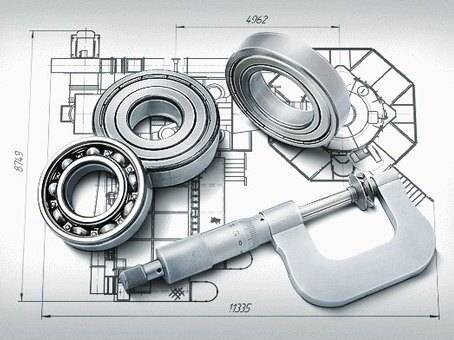
Practice to lettering, line and plane, geometric applications. Reading and drawing on orthographic projection, fundamental of dimensioning and tolerance, section view, standards and symbols. Practice to sketch by free-hand.



Prerequisite : 105101 Physics I
Basic concepts. Thermodynamic properties, temperature, work and heat. First law. Second law, irreversibilities and entropy. Availability. Tables and charts of properties. Analyses of thermodynamic processes and cycles. Vapor and gas power cycles.
Learning outcomes
This course provides basic concepts of Thermodynamics. Student will be able to describe the basic concepts of Thermodynamics. Student will be able to determine properties of pure substances at different states from property tables. Student will be able to apply the first law of thermodynamics to analyze energy conversion in closed and open systems. Student will be able to apply the second law of thermodynamics and the Carnot cycle to evaluate the thermal efficiency and coefficients of performance for heat engines, refrigerators, and heat pumps. Student will be able to calculate the entropy changes that takes place during processes.

ENG85 2110 Mechanics of Materials I 3(3-0-6)
Prerequisite: ENG85 2030
Engineering Statics Forces and stresses; stress-strain relations; stresses in beams; shear diagram and moment diagram; deflection of beams; buckling of columns; Mohr’s circle and combined stresses; failure criteria.
Course Learning Outcomes (CLOs)
- Define solution procedures and methods by applying knowledge of mathematics, science and fundamental engineering in analysis and design of structures and structural members in Mechanics of Materials.
- Find appropriate problem solutions within reasonable constraints by applying the concept of free-body diagram, equations of equilibrium and mathematics in Mechanics of Materials problems.


การควบคมระบบกาซชวภาพจากมูลสุกร
Research Seminar
Research Seminar introduces you to the process of academic research and allows you to open your mind to problem-solving strategies based upon formal inquiry and the detailed research of others. It requires the synthesis of the techniques of critical thinking, research, writing, and documentation. As part of the development of the key deliverable – a research proposal detailing conceptual frameworks and methodologies that are imagined but not carried out – you will create a question that is of ultimate importance to you. You will conduct research into the literature of others who have considered the same questions. You will be creative in developing a research design that will address this question and provide more knowledge to this field. The activities undertaken in this course are key to your development as a college-educated individual. Ultimately, you will engage in problem-solving strategies that can make a difference based upon systematic methods of inquiry.
This course aims at all essential language skills; listening, speaking, reading, and writing. The learners will expose the language through various learning materials and activities in order to acknowledge and understand the diversity of cultures, customs, traditions, thinking, and society of the world community. In addition, they will learn how to accurately read aloud texts, news, announcements, advertisements, poems and skits by observing the principles of reading. Moreover, class activities will encourage the learners to be able to converse and write to exchange data about themselves, various matters around them, experiences, situations, news or incidents, issues of interest and communicate them continuously and appropriately. The learns will learn how to choose and use requests, clarifications, explanations and give instructions; speak and write to show needs; offer and provide assistance; speak and write appropriately to ask for and give data, describe, explain, and compare. At the end of the course, the students are expected to be able to express their opinions about matters/issues/news/incidents, which they have heard and read by using register of language, tone of voice, gesture and manners appropriate to the level of the persons, time, occasions and places. Finally, the learners will learn how to conduct research/search, analyze, and conclude the data related to the learning areas from various sources.
This course aims at all essential language skills; listening, speaking, reading, and writing. The learners will expose the language through various learning materials and activities in order to acknowledge and understand the diversity of cultures, customs, traditions, thinking, and society of the world community. In addition, they will learn how to accurately read aloud texts, news, announcements, advertisements, poems and skits by observing the principles of reading. Moreover, class activities will encourage the learners to be able to converse and write to exchange data about themselves, various matters around them, experiences, situations, news or incidents, issues of interest and communicate them continuously and appropriately. The learns will learn how to choose and use requests, clarifications, explanations and give instructions; speak and write to show needs; offer and provide assistance; speak and write appropriately to ask for and give data, describe, explain, and compare. At the end of the course, the students are expected to be able to express their opinions about matters/issues/news/incidents, which they have heard and read by using register of language, tone of voice, gesture and manners appropriate to the level of the persons, time, occasions and places. Finally, the learners will learn how to conduct research/search, analyze, and conclude the data related to the learning areas from various sources.