การขึ้นรูปโลหะด้วยวิธีการหล่อ ทฤษฎีพื้นฐานการหล่อโลหะ การออกแบบงานหล่อ เช่น รูล้น ระบบทางเดินน้ำโลหะ การสร้างกระสวนสำหรับงานหล่อโลหะ กระบวนการหล่อโลหะสมัยใหม่ ทฤษฎีการขึ้นรูปโลหะด้วยแรงทางกล การขึ้นรูปโลหะก้อนด้วยแรงทางกล ได้แก่ การรีด การทุบ การอัด การดึง การขึ้นรูปโลหะแผ่น เช่น การตัดเฉือน การดัดขึ้นรูป การลากขึ้นรูปลึก ข้อบกพร่องในงานขึ้นรูปโลหะด้วยแรงทางกลและการป้องกัน การกัดเนื้อโลหะ เทคโนโลยีการขึ้นรูปโลหะสมัยใหม่ การเชื่อมโลหะ การปรับปรุงสมบัติของโลหะ
ผลการค้นหา: 3321

531216 PHYSICAL METALLURGY
โลหการกายภาพ
ประเภท: Miscellaneous
Statics of materials under external loading: Elastic behaviors; Plastic deformation; Stress analysis in two and three dimensions; Yield criteria; Effects of temperature, strain rate, residual stress, metallurgical factors and defects on mechanical behaviors of metals; Strengthening mechanisms in metals; Introduction to fracture mechanics, modes of fracture; fracture analysis in metals; Mechanical properties and mechanical testing, e.g., hardness, tension, torsion, creep, impact toughness, fracture toughness and fatigue; Analysis of mechanical properties for engineering design and applications
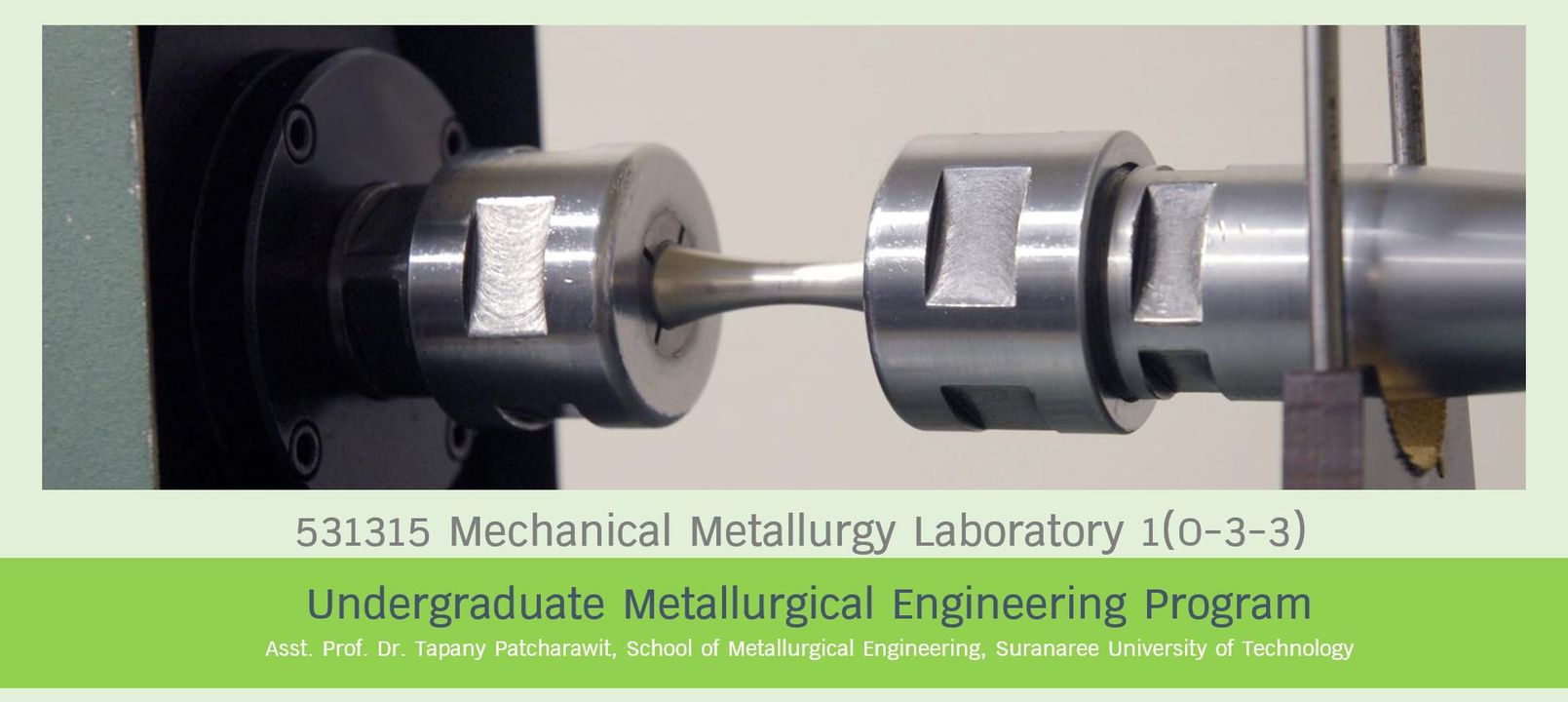
Introduction to mechanical testing for engineering applications; Assessment and analytical techniques of experimental data; Engineering measurement; Hardness testing; Measurement of stress and strain; Tensile testing; Torsion testing; Creep testing; Impact testing; Bend testing; Fatigue testing; Fractography
Metallurgy of commercial nonferrous metals, e.g, aluminium, magnesium, copper, zinc, titanium, nickel; Alloying, melting and forming into engineering components; Phase diagrams of alloys; Correlations among microstructure, physical, mechanical and corrosion properties affecting their utilizations in engineering services; Mechanical property improvement of nonferrous alloys; heat treatment in aluminium alloys, copper alloys and titanium alloys; Metallurgy and engineering significance of other nonferrous alloys, e.g., tin, lead, gold, and silver.
Stress-strain relationships; Elastic behavior, stress analysis in two and three dimensions; Yield criteria; Theory of plasticity; Dislocation theory; Deformation parameters and metallurgical factors affecting deformation in metals; Fractures; Standard mechanical testing: hardness, compression, tensile, creep, torsion, bending and impact testing; Introduction to fracture mechanics and safety assessment; Fatigue-life assessments, fatigue crack growth; Mechanical failures and prevention

Mechanical testing of metallic materials such as tensile, hardness, impact, creep, fatigue, torsion and bending according to the standard test methods. Fractography is followed to characterize the failure mode of each test on different engineering alloys. Analysis of test data is required.