Inspiration the SUT faculty member change their mindset about using English language in Thailand classroom. [UKPSF:A1,A3,K2,K5]
ผลการค้นหา: 129
ฟิสิกส์2: กลุ่ม 1
ตารางเรียน :วันจันทร์: 10-12 และ วันพุธ: 10-12 / 17-19
หัวข้อ (สำหรับสอบกลางภาค)
- ทบทวนคณิตศาสตร์ อาทิ เวกเตอร์, แคลคูลัส
- ไฟฟ้าสถิต สนามไฟฟ้า และความจุไฟฟ้า
- พลังงานศักย์ไฟฟ้า และความจุไฟฟ้า
- กระแสไฟฟ้าและวงจรไฟฟ้ากระแสตรง
- สนามแม่เหล็ก กฎของบิโอต์ ซาวารต์ กฎของแอมแปร์
**** VDO การสอน : แจ้ง Link ทาง Facebook และ E learning) ****
This course provides essential principles of hyperspectral remote sensing system and its applications. Also, public and commercial image processing softwares are introduced and applied on hyperspectral image classification along with individual assignment/presentation. Specific topics include (1) principles of hyperspectral remote sensing, (2) data collection and spectral library construction, (3) hyperspectral image preprocessing, (4) hyperspectral image classification algorithms, (5) hyperspectral image classification and accuracy assessment.
Expected learning outcomes
Upon completion of this course, the students should be able to:
1. Explain principles of hyperspectral remote sensing and its applications.
2. Apply image processing softwares for spectral library construction, hyperspectral image preprocessing, image classification and accuracy assessment.
3. Integrate yielded knowledge on hyperspectral remote sensing in practice.
109703 Protein Structure and Engineering 4(4-0-8)
Prerequisite : 109700 Graduate Biochemistry /Consent of the School
Basic review of the structures and properties of amino acid peptide bonds, peptides, polypeptides & proteins, concepts for protein engineering, protein detection, purification and evaluation, electrophoresis, size determination, quaternary structure evaluation, protein primary structure determination, electronic structures and properties of amino acid residues and their reactivities, chemical synthesis of peptides & proteins; biological nucleic acid and protein synthesis & posttranslational modifications, Methods in genetic engineering of proteins, molecular evolution and the use of protein sequence alignment & analysis, physical basis of size and shape determination (e.g. diffusion, analytical centrifugation, light scattering, small angle X-ray scattering), spectroscopic evaluation of secondary structure and tertiary structure, protein structure determination by X-ray crystallography, NMR, & EM tomography, structural modeling and prediction, protein folding, protein interactions with ligands, proteins in membranes, student proposal on protein engineering.
Expected Learning Outcomes
On completion of this course, students are able to
- explain principles of protein structure and the physical interactions involved in attaining protein structure
- understand the basics of the methods and experiments used to study proten structure and structure-function relationships
- evaluate and analyze scientific papers on protein structure and engineering and evaluate the quality of the data
- have a basic understanding of the methods used to engineer proteins and to evaluate the effects of such engineering
- have conscientious in their academic and professional conduct, and able to work with others
- communicate scientific knowledge appropriately and effectively
- Students are eager for knowledge and learning

ศึกษาหลักการการควบคุมการเคลื่อนไหวและการเรียนรู้ทักษะการเคลื่อนไหว การพัฒนาทักษะการเคลื่อนไหว ปัจจัยที่เกี่ยวข้องกับการควบคุมการเคลื่อนไหวและการเรียนรู้ทักษะการเคลื่อนไหว
กิจกรรมแลกเปลี่ยนเรียนรู้ด้านการสอน ในหัวข้อ การพัฒนาการเรียนการสอนรายวิชาโครงงาน โดยใช้วิธีการ “เรียนรู้จากประสบการณ์ประดิษฐ์ (Learning Through Maker Experience)”
โดย ผศ. ดร.บุญส่ง สุตะพันธ์ อาจารย์ประจำสาขาวิชาวิศวกรรมอิเล็กทรอนิกส์ สำนักวิชาวิศวกรรมศาสตร์
พนักงานดีเด่นสายวิชาการ ประจำปี พ.ศ. 2560 ด้านการสอน กลุ่มผู้มีประสบการณ์การสอนในสถาบันอุดมศึกษาตั้งแต่ 3 - 10 ปี
ในวันอังคารที่ 17 กรกฎาคม 2561 ตั้งแต่เวลา 13.30 น. เป็นต้นไป ณ ห้องประชุม 1 ชั้น 1 อาคารวิชาการ 1
Course Description
trends, theories, research, and controversial issues in different areas of English language studies such as educational reform, corpus linguistics, second language acquisition, computer-assisted language learning, teaching methodology, assessment, syllabus design, discourse analysis, etc. are discussed. Related on-line databases are also introduced to students.
Course Coordinators: Assoc. Prof. Songphorn Tajaroensuk
Developing students’ abilities for effective communication in social settings; focusing on integrated skills with the primary emphasis on listening and speaking; developing communication and language learning strategies; and promoting autonomous learning using various resources
Enhancing students’ proficiency in social communication; developing students’ ability to accomplish learning tasks; using integrated skills and task-based learning with emphasis on contemporary themes and current issues; reading semi-academic texts from a variety of authentic sources such as newspapers, magazines and online resources
เพิ่มพูนทักษะภาษาอังกฤษเพื่อการสื่อสารในระดับที่สูงขึ้น พัฒนาทักษะทางภาษาและกลวิธีในการเรียนรู้ภาษา บูรณาการทักษะทางภาษาและส่งเสริมให้ทำกิจกรรมแบบเผชิญประสบการณ์ เน้น เนื้อหาในหัวข้อเรื่อง และประเด็นร่วมสมัยกึ่งวิชาการจากแหล่งข้อมูลต่าง ๆ โดยไม่มีการดัดแปลงภาษา เช่น หนังสือพิมพ์ บทความในนิตยสาร และแหล่งข้อมูลอิเลคทรอนิคส์
ความหมายและความสําคัญของความรู้ ประเภทและระดับของความรู้ รูปแบบการคิดและการเรียนรู้ของมนุษย์ กรอบแนวคิดการจัดการความรู้ องค์ประกอบของการจัดการความรู้ กระบวนการของการจัดการความรู้ การสร้างความรู้ ระบบการจัดเก็บและค้นคืนองค์ความรู้การจัดการความรู้ในภาคต่าง ๆ เช่น ภาคธุรกิจ ภาครัฐ ภาคการศึกษา เป็นต้น
Definition and importance of knowledge; types and levels of knowledge; human thinking patterns and human learning processes; knowledge management frameworks; components of knowledge management; knowledge management process; knowledge creation; knowledge storage and retrieval systems; knowledge management in business, government, education sectors, etc.
This research-driven course will focus on developing innovation and creativity as catalysts for new research into new theoretical models as well as techniques for improving learning opportunities in both institutional and non-institutional settings. To this end, it will encourage students to review current educational contexts, question current dominant models of (language) learning/teaching, identify and examine new ones and develop their own. Importantly, it will draw on interdisciplinary areas such as brain research and perception and awareness studies as well as modern intellectual directions such as critical theory and postmodern thought to guide its development. It will also draw on the great potential of modern technology both to support learning/teaching and to investigate it (especially through its potential to offer new ways of thinking about language education

245302 การพัฒนาภาวะผู้นำ 2(1-2-3)
(Leadership Development)
วิชาบังคับก่อน : ไม่มี
แนวคิดภาวะผู้นำ คุณลักษณะและบทบาทของผู้นำ การประเมินภาวะผู้นำของตนเอง เทคนิคการพัฒนาตนเอง การพัฒนาทักษะระหว่างบุคคล การพัฒนาทักษะในการพัฒนางาน เน้นการฝึกปฏิบัติ กิจกรรมฝึกฝนตนเองและกิจกรรมกลุ่ม
ผลลัพธ์การเรียนรู้ที่คาดหวังระดับรายวิชา
นักศึกษาที่ผ่านรายวิชานี้มีความสามารถ ดังนี้
1. อธิบายแนวคิดภาวะผู้นำ คุณลักษณะและบทบาทของผู้นำ
2. ประเมินภาวะผู้นำของตนเอง
3. ฝึกปฏิบัติกิจกรรมฝึกฝนตนเองและกิจกรรมกลุ่ม
4. พัฒนาทักษะระหว่างบุคคลและเทคนิคการพัฒนาตนเอง
245302 Leadership Development 2(1-2-3)
Pre-requisite : None
Strategic leadership concept, characteristics and roles of leaders, leadership self-assessment, self-development techniques, interpersonal skills development, task skills development emphasizing practices, self-development activities and team activities
Course learning outcomes
Having successfully completed this course, student must be able to:
1. Explain strategic leadership concept, characteristics and roles of leaders
2. Evaluate self-leadership
3. Practice activities in forms of self-training and team-training
4. Develop interpersonal skills and self-development techniques
Plant Breeding is an undergrad course that requires the use of e-learning 2 system for distributing class materials and feedback
.
รหัสและชื่อรายวิชา
802313 การจัดการมูลฝอย
802313 Solid Waste Management
รายวิชาที่ต้องเรียนมาก่อน (Pre-requisite) / รายวิชาที่ต้องเรียนพร้อมกัน (Co-requisites)
802302 พื้นฐานการออกแบบงานอนามัยสิ่งแวดล้อม หรือโดยความเห็นชอบของสาขาวิชา
คำอธิบายรายวิชา (Course Description)
หลักการจัดการมูลฝอยชุมชน มูลฝอยติดเชื้อ มูลฝอยที่เป็นพิษหรืออันตรายจากชุมชน และสิ่งปฏิกูล แหล่งกำเนิด องค์ประกอบ ลักษณะสมบัติ และการเก็บตัวอย่างและตรวจวิเคราะห์ทางห้องปฏิบัติการ การประมาณอัตราการเกิดจากแหล่งกำเนิดต่างๆ ในชุมชนทั้งจากครัวเรือน สถานบริการ และโรงงานอุตสาหกรรม การเก็บรวบรวม การคัดแยก การขนถ่าย และการเก็บขน เทคโนโลยีและการจัดการในการบำบัดและกำจัด การวางแผนและการลดปริมาณ การนำกลับมาใช้ซ้ำ และการนำกลับมาใช้ใหม่ รวมถึงกฎหมายที่เกี่ยวข้อง
ภาคการศึกษา / ผู้เรียน / สถานที่เรียน
ภาคการศึกษาที่ 3/2566
ผู้เรียน: นักศึกษาสาขาวิชาอนามัยสิ่งแวดล้อม ชั้นปีที่ 3 จำนวนผู้เรียนที่รับได้ ประมาณ 90 คน
สถานที่เรียนและเวลา: อาคารปฏิบัติการด้านเทคโนโลยีดิจิทัล (B6) ห้อง B6110-A วันพฤหัสบดี เวลา 13.00-17.00 น. กลุ่ม1
ENG35 4505 Reverse Engineering 2(1-3-5)
Prerequisite : none Course Type: Technical Elective
This course Introduces learners to Reverse Engineering (RE). Applying RE
methodologies allow learners to test and analyse an object or a system in order to; identify,
understand, and document its functionality and operation. RE can play a key role in helping
learners understand engineering products to develop a better device.
Learning outcomes
1. Ability to explain reverse engineering concept.
2. Ability to use information requirements and factors influencing to apply with reverse engineering.
3. Ability to use reverse engineering concept for designs with satisfy functional and legal requirements.
Course Learning Outcomes:
- To apply computer programming in calculation and solving the problems related to chemical engineering, especially by numerical methods both by spreadsheet program and computer language.
- To appropriately apply digital technology for necessary information and numerical methods for problem solving.
- To effectively apply computer programming skills, especially numerical methods, on solving noncomplex chemical engineering problem; for example, on group-assigned term projects.
- To efficiently explain problem solving methods, computer programming and numerical results of group-assigned term projects.
- To understand the importance and method of citation for references, especially on the references that students use in their term projects.
This course provides an introduction of machine learning theory and programming. Topics include (i) programming with libraries related to machine learning (ii) supervised learning (parametric/non-parametric algorithms, support vector machines, kernels, neural networks. (ii) unsupervised learning (k-mean clustering, principle component analysis: PCA). This course will also draw from numerous case studies and applications, so that student will learn how to apply learning algorithms to build smart robots (perception & control), speech recognition, computer vision and other areas.

ระบบควบคุมการขับขี่อัตโนมัติมีการพัฒนาอย่างต่อเนื่องโดยมีการประยุกต์ใช้ Artificial Intelligence อาทิ เรียนรู้ของเครื่อง (Machine Learning) กับยานยนต์ในระบบต่างๆ ไม่ว่าจะเป็นการมองเห็นหรือการรับรู้ แยกแยะสิ่งที่โดยรอบยานยนต์ เพื่อทำให้ยานยนต์สามารถนำข้อมูลต่างๆ เหล่านั้นมาใช้ในการควบคุมให้ยานยนต์สามารถทำภารกิจได้สมบูรณ์ ตัวอย่างเช่น ระบบ Adaptive Cruise Speed Control, Lane Tracking System ใช้การมองเห็นของคอมพิวเตอร์ (Computer Vision) รวมถึงการมองเห็นวัตถุที่กีดขว้างเส้นทาง และใช้เป็นข้อมูลในการตัดสินการสร้างเส้นทางหลบหลีกนั้นเอง

คำอธิบายรายวิชา
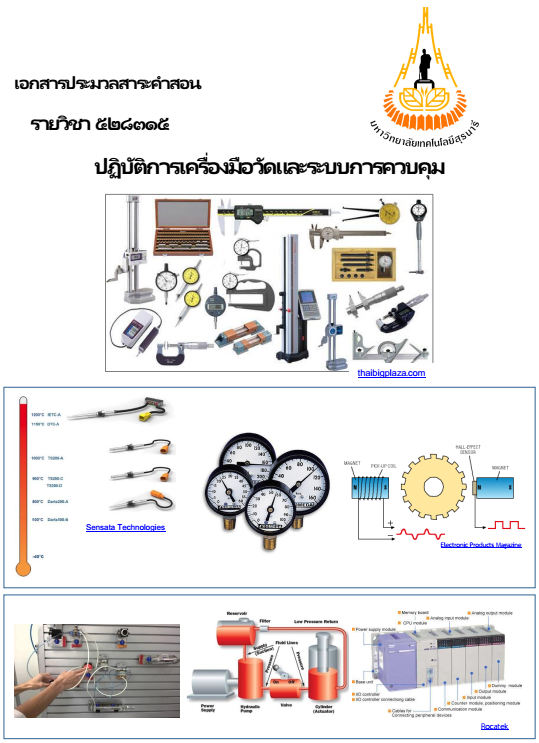
หลักการเบื้องต้นของระบบเครื่องมือสำหรับการวัดและระบบควบคุมที่เกี่ยวข้องกับกระบวนการขึ้นรูปพอลิเมอร์ หัวข้อที่รวมอยู่ในวิชานี้ได้แก่ พื้นฐานการวัด หลักการทำงาน และองค์ประกอบของเครื่องมือวัดและระบบควบคุม เซ็นเซอร์ที่ใช้ในงานทางวิศวกรรม ระบบการควบคุมและการปรับตั้งตัวแปรระบบการควบคุมต่างๆ
ผลสัมฤทธิ์การเรียนรู้ (Learning Outcome)
เมื่อสิ้นสุดการเรียนรายวิชานี้ ผู้เรียนควรมีความสามารถด้านต่างๆ ต่อไปนี้
Course Content
ประเภทและการใช้งานวัสดุพอลิเมอร์ วัสดุพอลิเมอร์ในชีวิตประจำวัน/ในงานเชิงวิศวกรรม/ชนิดสมรรถนะสูง/ชนิดพิเศษ กลุ่มการใช้งานวัสดุพอลิเมอร์ การทดสอบสมบัติทางกล ความร้อน ไฟฟ้า แสง เคมี การติดไฟ และการกั้นการแพร่ผ่าน เทอร์โมพลาสติก เทอร์โมเซต อิลาสโตเมอร์ พอลิเมอร์ผสมและ (นาโน) คอมพอสิท พอลิเมอร์ชีวภาพและพอลิเมอร์แตกสลายได้ทางชีวภาพ บล็อกโคพอลิเมอร์ การนำไปใช้ประโยชน์ขั้นสูง
Course Learning Outcomes
เมื่อสิ้นสุดการเรียนรายวิชานี้ ผู้เรียนควรมีความสามารถด้านต่างๆ ต่อไปนี้ สามารถเชื่อมโยงได้ระหว่างโครงสร้างและสมบัติและสมรรถนะของเทอร์โมพลาสติก เทอร์โมเซต และ อิลาสโตเมอร์ สามารถเลือกวัสดุพอลิเมอร์และผลิตภัณฑ์สำหรับการใช้งานที่จำเพาะเจาะจง
Course Responsibility to Program Learning Outcomes (ความรับผิดชอบของรายวิชาต่อผลลัพธ์การเรียนรุ้ของหลักสูตร)
PLO3: สามารถประยุกต์ใช้การออกแบบทางวิศวกรรมพอลิเมอร์เพื่อพัฒนาผลิตภัณฑ์พอลิเมอร์ที่ตรงวัตถุประสงค์การใช้งานและตรงตามความต้องการของผู้บริโภคโดยคำนึงถึง สิ่งแวดล้อม ความปลอดภัย และปัจจัยทางสังคมที่เกี่ยวข้องกับประชาคมโลก
PLO5: สามารถทำงานร่วมกับทีมงานที่มีสมาชิกจากหลายสาขาวิชาชีพ ในฐานะสมาชิกในทีม และมีความเป็นผู้นำ
PLO6: สามารถติดต่อสื่อสารในงานวิศวกรรมได้อย่างมีประสิทธิผลกับผู้รับที่หลากหลาย ทั้งภาษาไทยและภาษาต่างประเทศ ด้วยวาจา การเขียนรายงาน การเสนอผลงาน ทางวิศวกรรมพอลิเมอร์